Painless hair transplant: what you feel during the procedure
“Painless hair transplant” usually describes a more comfortable way of giving local anaesthesia. This page explains plainly what you may feel at each stage.
Written by: Royce Hair Lab editorial teamLast updated:
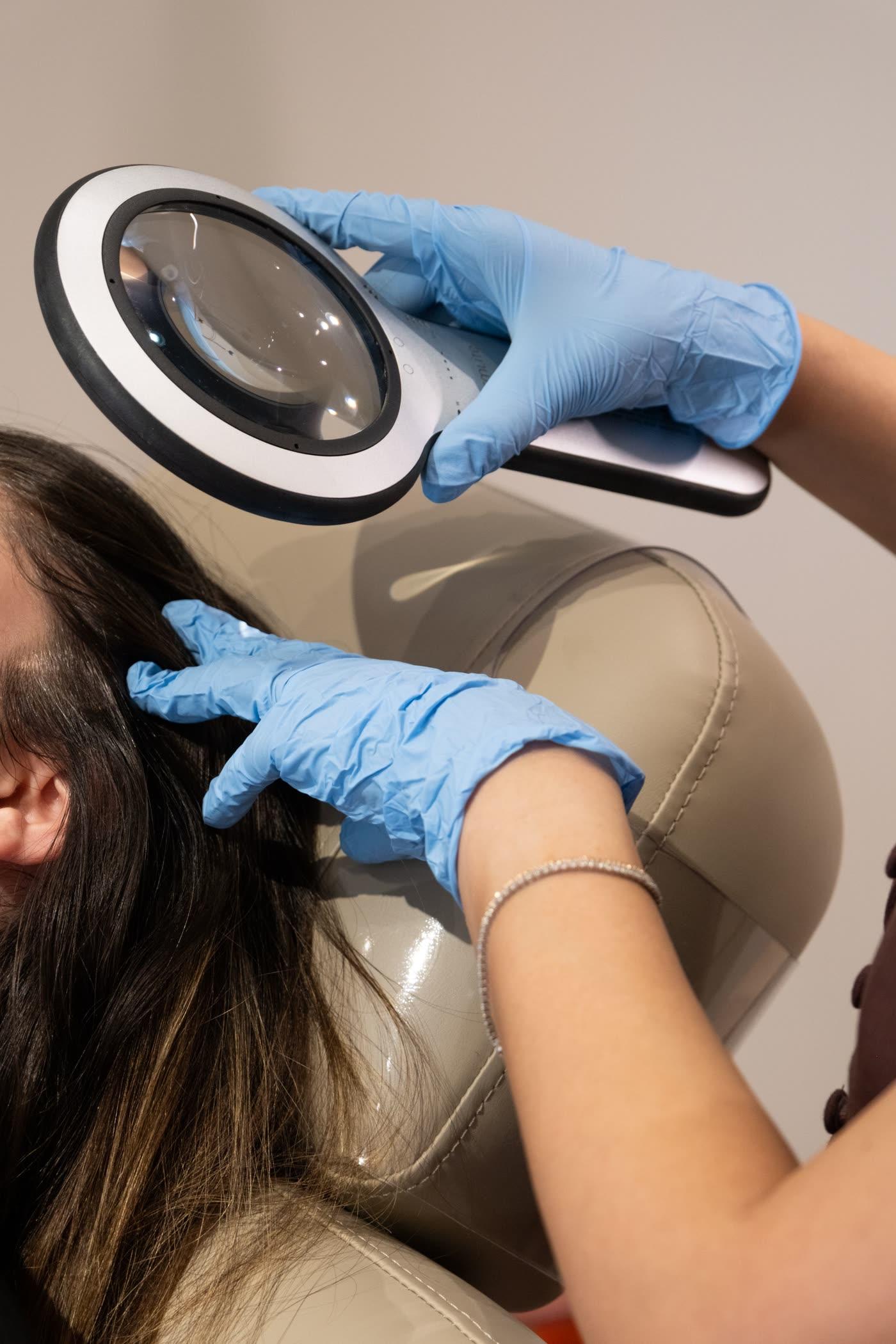
With any surgical or interventional procedure, results vary from person to person. You are advised to get a detailed opinion from your doctor before the procedure. Images are representative; they do not show our clinic or real patients.
Where is pain felt?
A hair transplant is done under local anaesthesia. Most of the discomfort is the brief sting and burning while the anaesthetic is injected. Once it works, extraction and placement are not expected to hurt; you may feel touch and pressure.
How can anaesthesia be more comfortable?
- Fine needles and slow injection: giving the anaesthetic slowly and gradually reduces the sting.
- Needle-free (pressure) injectors: some centres give the first dose with a needle-free pressure device. Ask your doctor which method will be used.
- Cooling and vibration: used to dull skin sensation briefly.
- Sedation: for very anxious patients, light sedation can be discussed in the hospital setting with an anaesthesiologist's assessment.
Is there pain afterwards?
On the first night the donor area may feel tender and tight. This is usually controlled with painkillers your doctor recommends and eases within a few days. Itching in the recipient area is a more common complaint.
What to know
Pain perception differs from person to person. Saying you will feel nothing would not be accurate; the aim is to make the few minutes of anaesthesia as comfortable as possible and the rest of the procedure pain-free. Ask your questions in the online analysis or at the consultation.
Common questions
- 01
Yes. It is done under local anaesthesia; you are awake, can rest, watch a film and eat during breaks.
- 02
After the first dose from the pressure device, a fine needle may be needed to complete deeper numbing, but this is done in an area that is already numb.